


Driving with a bad CV axle is unsafe and can lead to serious vehicle damage. Symptoms include vibrations, clicking noises, and difficulty steering. Addressing these issues promptly can prevent further complications and costly repairs.
Identifying Bad CV Axle Symptoms
A bad CV axle can lead to significant issues while driving, making it crucial to recognize the symptoms early. Understanding these signs can help prevent further damage to your vehicle and ensure your safety on the road. This section outlines the key indicators that suggest your CV axle may be failing.
A failing CV axle can manifest through various symptoms that are often noticeable during driving. Ignoring these signs can lead to more severe damage to your vehicle. Common symptoms include:
-
Vibrations: Unusual shaking felt in the steering wheel or floorboard.
-
Clicking Noises: Sounds when turning, especially during sharp turns.
-
Grease Leakage: Visible grease around the axle boot.
-
Difficulty Steering: Resistance or looseness in the steering wheel.
| Symptom | Primary Suspect | Difficulty 1-5 |
|---|---|---|
| Vibrations | Bad CV Axle | 3 |
| Clicking Noises | Worn Joints | 4 |
| Grease Leakage | Damaged Boot | 2 |
| Difficulty Steering | Axle Failure | 5 |
Recommended Products

PURPOSE: Specially formulated grease designed to lubricate and protect CV joint boots, ensuring smooth and reliable drivetrain performance.

Outperforms the best conventional or synthetic greases and lubes
Common Causes of CV Axle Failure
Understanding the common causes of CV axle failure is essential for any driver concerned about vehicle safety and performance. A failing CV axle can lead to serious issues, so recognizing the underlying factors can help in timely diagnosis and repair. This section will explore the typical reasons behind CV axle deterioration, providing insight into how to prevent costly repairs.
A bad CV axle typically results from wear and tear, lack of lubrication, or physical damage. The most common root causes include:
-
Worn Joints: Over time, the joints can wear out, leading to failure.
-
Damaged Boots: Cracks in the rubber boot allow dirt and moisture to enter.
-
Improper Installation: Faulty installation can lead to premature failure.
Identifying the root cause is essential for effective repair.
Step-by-Step Fix for a Bad CV Axle
When dealing with a bad CV axle, understanding the symptoms and repair process is crucial for maintaining vehicle safety and performance. This section provides a detailed, step-by-step guide to diagnosing and fixing a faulty CV axle, ensuring you can address the issue effectively and prevent further damage to your vehicle.
Fixing a bad CV axle requires specific tools and a methodical approach. Follow these steps for a successful repair:
-
Gather Tools: Obtain a jack, jack stands, socket set, and replacement CV axle.
-
Lift the Vehicle: Use the jack to elevate the car and secure it with jack stands.
-
Remove the Wheel: Take off the wheel to access the CV axle.
-
Disconnect Components: Remove the axle nut and any connected components.
-
Replace the Axle: Install the new CV axle and reconnect components.
-
Reattach the Wheel: Put the wheel back on and lower the vehicle.
Recommended Products
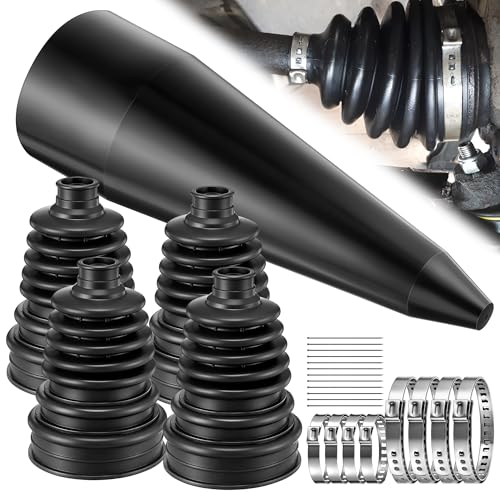
💰【4Pack CV Axle Boot Repair Kit】This CV joint boot kit includes 4 durable rubber CV axle boots, 1 reusable CV boot tool cone mounting, 8 stainless steel clamps, and 12 heavy duty plastic zip ties, everything needed to reseal CV joints in one complete CV boot repair kit. Avoid replacing the entire axle or paying high labor costs. Ideal for multiple repairs, backup use, and long term maintenance, offering greater value than a single CV axle boot kit
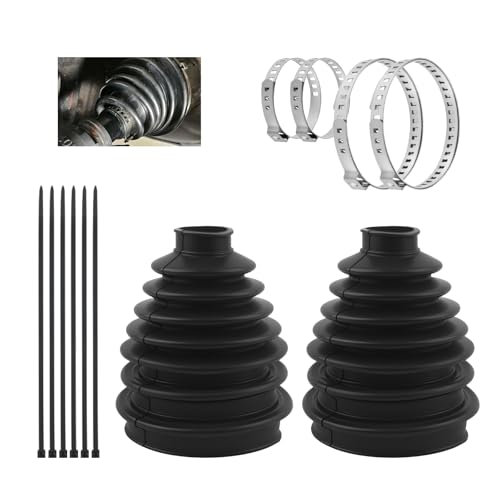
Dust and Leak Protection: This axle boot precisely covers the CV joint part, effectively blocking dust, sand, and other debris from entering the interior. It also provides a tight seal to avoid internal lubricant leakage, thereby avoiding abnormal wear that could cause gaps

Universal Fit: With calibers range 2.53", 3.07", 3.66", this universal split CV axle boot kit of car accessories fits most cars and trucks. Its design absorbs road shocks and withstands exposure to moisture and debris. Before ordering, please verify your required boot dimensions for proper fit
Evaluating Repair Costs for CV Axle Replacement
When dealing with a bad CV axle, understanding the potential repair costs is crucial for making informed decisions. This section delves into the factors influencing the price of replacement, including parts, labor, and any additional services that may be necessary. By evaluating these costs, you can better assess your options and budget for the repair.
Repair costs for a CV axle can vary based on location and vehicle make. Typical costs include:
-
Parts: $100 to $300 for a new CV axle.
-
Labor: $100 to $200, depending on the shop’s hourly rate.
-
Total Estimate: $200 to $500 for parts and labor combined.
| Cost Component | Estimated Range |
|---|---|
| Parts | $100 – $300 |
| Labor | $100 – $200 |
| Total | $200 – $500 |
Recommended Products

Package Contents: Our CV boot kit is suitable for 19mm to 24mm shafts, the package contains 2 piece of one-piece design CV axle boot, 4 stainless steel clips and 6 nylon ties, these fittings can be easily adjusted to fit the dimensions of the CV shaft
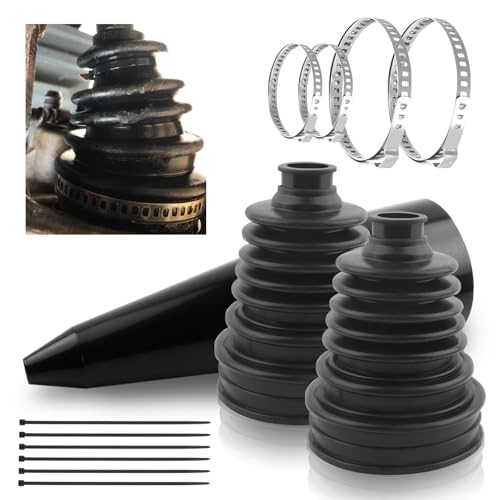
Specifications: Axle boot is 4.72 inch in length and small port inside diameter is 0.78 inch, and contains three different calibers: 2.55 inch/65 mm, 3.14 inch/80 mm and 3.54 inch/90 mm. Please check the size data you need before purchase

Designed to work with a wide range of cars, SUVs, and trucks, this split CV boot kit offers broad compatibility. It’s an ideal solution for restoring constant velocity joint function on nearly any vehicle, helping you avoid costly shop repairs
CV Axle Maintenance and Longevity Tips
Maintaining your CV axle is crucial for ensuring the longevity and safety of your vehicle. Regular inspections and timely repairs can prevent more severe issues down the line. This section provides practical tips for extending the life of your CV axle and keeping your vehicle in optimal condition.
Regular maintenance can extend the life of your CV axle. Consider these preventive measures:
-
Inspect Boots Regularly: Check for cracks or leaks.
-
Maintain Proper Alignment: Ensure your vehicle’s wheels are aligned.
-
Avoid Rough Terrain: Minimize driving on uneven surfaces.
Taking these steps can help prevent costly repairs down the line.
Driving Risks with a Failing CV Axle
A failing CV axle can significantly compromise vehicle safety, leading to a range of driving risks. Understanding the symptoms of a damaged axle is crucial for identifying potential hazards on the road. This section explores the dangers associated with driving on a bad CV axle, emphasizing the importance of timely repairs to ensure both your safety and that of others.
Do not drive with a bad CV axle. Doing so can lead to complete axle failure, resulting in loss of control and potential accidents. Address symptoms immediately to ensure your safety and the longevity of your vehicle.
