


It is a common misconception that exploring a world-class city requires a massive bank account and a high-limit credit card. We often see the glossy photos of five-star rooftop bars and private tours that cost more than a month’s rent, but the truth is that many of the most meaningful travel experiences don’t cost a dime. In fact, some of the most famous cities in the world have been designed with public access in mind, offering up their best secrets to anyone willing to put on a pair of comfortable walking shoes and look past the velvet ropes.
As we move through 2026, the cost of travel is definitely a topic of conversation, but you do not have to let your budget dictate your sense of wonder. From the world-class museums of London that have been free for decades to the stunning public parks of Tokyo and the historic monuments of D.C., you can fill a week-long itinerary with incredible sights without ever opening your wallet. Here is how to see the big names on a small budget.
London: The King of Free Museums
London is famously expensive when it comes to a pint of beer or a hotel room, but it is arguably the most generous city on earth when it comes to culture. Most of the major national museums offer free entry to their permanent collections, and these aren’t just small galleries; we are talking about some of the most significant institutions in the world.
The British Museum is the big one. You can walk right in and see the Rosetta Stone, the Elgin Marbles, and an incredible collection of Egyptian mummies without paying a cent. If art is more your speed, the National Gallery in Trafalgar Square houses masterpieces by Van Gogh, Da Vinci, and Monet. For those who prefer modern vibes, the Tate Modern sits in a converted power station on the South Bank and offers some of the best contemporary art alongside a killer view of the Thames from its upper floors.
Washington, D.C.: America’s Front Porch
For American travelers staying a bit closer to home, our own capital is a gold mine of free attractions. The Smithsonian Institution is the world’s largest museum and research complex, and every single one of its museums in D.C. is free to the public. You can spend an entire day at the National Air and Space Museum looking at the Wright brothers’ plane or head to the National Museum of American History to see the original Star-Spangled Banner.
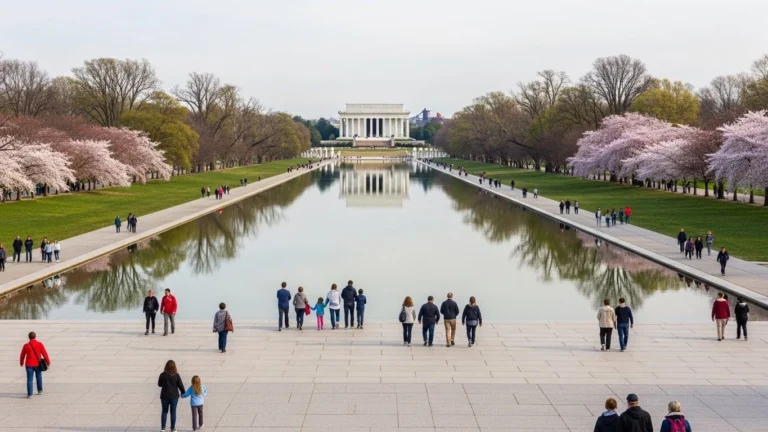
Beyond the museums, the National Mall itself is a free open-air gallery of history. Walking from the Lincoln Memorial past the Vietnam Veterans Memorial to the Washington Monument is a rite of passage that doesn’t cost a dollar. If you want a break from the history, the National Zoo is also free, and the National Arboretum offers 446 acres of gardens and the stunning historic Capitol Columns which make for an incredible photo op.
Tokyo: Panoramic Views and Ancient Shrines
Tokyo can feel like a futuristic maze where everything is designed to separate you from your yen, but there are plenty of ways to see the city for free. Most tourists pay a hefty fee to go up the Tokyo Skytree for a view, but smart travelers head to the Tokyo Metropolitan Government Building in Shinjuku. The observation decks on the 45th floor are completely free and offer a stunning 360-degree view of the city; on a clear day, you can even see Mount Fuji.
For a taste of traditional culture, Senso-ji Temple in Asakusa is Tokyo’s oldest temple and costs nothing to enter. Walking through the massive Kaminarimon Gate and down the bustling Nakamise shopping street is a sensory experience that defines the city. Similarly, the Meiji Shrine is a peaceful forested oasis in the middle of the city where you can walk the wide gravel paths and see traditional Shinto architecture for free.
A Budget Win in Budapest
A few years ago, I was in Budapest and really wanted to see the views from Fisherman’s Bastion. It is a fairy-tale looking terrace on the Buda side of the river that overlooks the Parliament building. I noticed there was a small fee to go up to the very top turrets, but if you just walked ten feet to the left, the view from the lower terrace was exactly the same and totally free. I spent an hour sitting there watching the sun go down over the Danube, feeling like I had found a secret loophole. It reminded me that the “premium” experience is usually just a way to charge people who are in a hurry. If you take your time and look around, the best view is often right next to the one you have to pay for.
Rome: The World’s Largest Outdoor Gallery
Rome is a city where history is literally under your feet. While the Colosseum and the Vatican Museums have entrance fees, much of the city’s best art is located in places you can enter for free. Many of Rome’s churches are home to masterpieces by Caravaggio and Michelangelo. For example, the Church of San Luigi dei Francesi houses three incredible Caravaggio paintings that you can view for free; you just might need to drop a euro into a light box to see them clearly.
The famous fountains and piazzas are also entirely free. Standing in front of the Trevi Fountain or wandering through the Baroque splendor of Piazza Navona provides a level of beauty that no paid museum can top. If you want a view, skip the expensive hotel bars and hike up to the Janiculum Hill or the Pincio Terrace above Piazza del Popolo. You get the same orange-roofed skyline of Rome for the price of a short walk.
Paris: Parks and Hidden Passages
Paris is often seen as the peak of luxury, but the city’s true charm lies in its public spaces. The Luxembourg Gardens and the Tuileries are masterclasses in landscape design and offer some of the best people-watching in Europe. You can grab a green metal chair by the pond and soak in the atmosphere for as long as you like.
For a more unique experience, explore the “Passages Couverts.” These are 19th-century glass-roofed shopping arcades tucked away between the main boulevards. They are full of quirky bookshops, old-school toy stores, and beautiful mosaics. It costs nothing to walk through them, and they offer a glimpse into a side of Paris that feels frozen in time. Also, don’t forget that walking along the Seine at night to see the Eiffel Tower sparkle is the most iconic Parisian experience there is, and it doesn’t cost a cent.
Mexico City: Markets and Murals
Mexico City is a place where culture happens in the streets. The Zocalo, one of the largest public squares in the world, is surrounded by historic buildings like the Metropolitan Cathedral, which is free to enter. Inside the nearby Palacio Nacional, you can see the massive, world-famous murals by Diego Rivera that tell the history of Mexico; while there is sometimes a small fee or a requirement to show an ID, it is incredibly affordable compared to Western standards.
The city’s markets, like the Mercado de Coyoacan or the massive La Merced, are free attractions in their own right. They are vibrant, loud, and full of incredible sights and smells. You can spend hours wandering the stalls of colorful produce and hand-made crafts. If you need some green space, Chapultepec Park is one of the largest urban parks in the world and is home to lakes, monuments, and botanical gardens that are open to the public for free.
