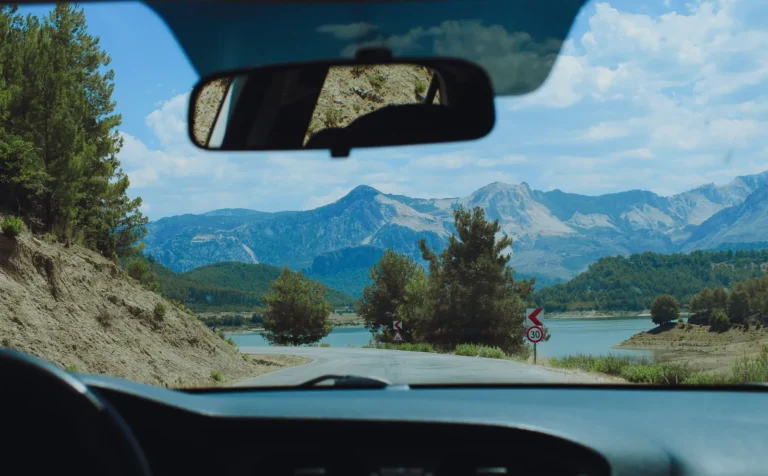
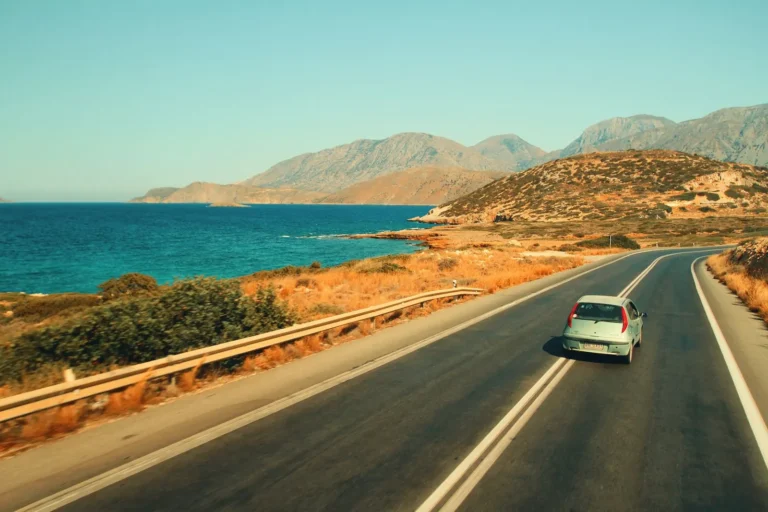
Renting a car abroad sounds simple until you’re standing at the rental desk and someone asks for a document you’ve never heard of. The International Driving Permit (IDP) is the one people forget most, but it’s not the only thing that changes when you drive in another country. Roads, tolls, insurance and even which side of the car the steering wheel is on can all be different.
Here’s what to sort out before you drive abroad, with country examples for the rules that trip people up most often.
Last reviewed: November 2026. Rules change and rental companies set their own policies, so check the official sources linked below for your destination.
What an International Driving Permit actually is
An IDP is a booklet that translates your home driving license into several languages. It isn’t a license by itself. You have to carry it together with your regular license. It’s issued in your home country before you leave, and you usually can’t get one once you’re abroad.
- In the US, the State Department says only two organizations are authorized to issue IDPs: AAA and the American Automobile Touring Alliance (AATA). Anyone else selling an “international driver’s license” online is not official. See the State Department’s driving abroad page.
- In the UK, IDPs are sold in person at participating PayPoint stores. The gov.uk IDP page has a checker that shows which type you need for each country.
- In Canada, the CAA issues IDPs. In Australia, state motoring clubs such as the NRMA and RACV do.
IDPs are typically valid for one year, and there are different versions based on international conventions (mainly 1949 and 1968). Some countries accept only one version, which is why the UK checker exists.

Do you need one? Country examples
Requirements depend on the country and on the license you hold, and rental companies may ask for an IDP even when the law doesn’t. A few examples that are commonly cited for US license holders:
| Country | What to know |
|---|---|
| Japan | Visitors generally need an IDP issued under the 1949 Geneva Convention. A few countries’ licenses use an official Japanese translation instead. Without the right document, rental companies will refuse you. |
| Italy, Spain, Greece, Austria | An IDP is widely reported as required for non-EU licenses, and police may ask for it at a stop. |
| Thailand | An IDP is required to drive legally as a tourist, including on scooters. Travel insurance may not pay out for accidents without a valid license for that vehicle. |
| Ireland and the UK | A US license is usually accepted for visitors, but check your rental company’s terms. |
| Mexico | A valid US license is usually accepted. Mexican auto insurance is the bigger issue (see our Mexico road trip guide). |
The quickest way to check is your government’s travel advice page for the destination. The “local laws” or “driving” section usually says whether an IDP is needed. If in doubt, get one. It’s inexpensive and quick to obtain at home, and much harder to sort out from abroad.
Driving on the left
Dozens of countries drive on the left, including the UK, Ireland, Australia, New Zealand, Japan, South Africa, Thailand, India and much of the Caribbean. If you’ve never done it, a few things help:
- Book an automatic. You don’t want to learn to shift gears with your other hand at the same time.
- Remember that the driver sits toward the center line. On narrow roads, it’s easy to drift toward the passenger-side curb.
- Roundabouts go clockwise. Look right first.
- Avoid driving straight off a long-haul flight. Jet lag and new road rules don’t mix.
Our Ireland driving guide goes through narrow lanes and rural roads in more detail.
Tolls, vignettes and city zones
These catch people out because fines often arrive by mail, months after the trip, sometimes with a rental company admin fee added.
- Switzerland and Austria require a vignette (a prepaid motorway toll sticker or e-vignette) for most motorways. Rentals from inside those countries usually have one. Cars rented across the border may not.
- France, Germany and other countries have low-emission zones in many cities that require a sticker. Rentals registered there usually include it.
- Toll roads in France, Italy, Spain, Portugal and Croatia often take cards, but some booths are cash only. In Portugal, some highways use only electronic tolls. Ask the rental company how tolls are charged.
Rental insurance, simply explained
Rental desks offer a lot of acronyms. The main ones are collision damage waiver (CDW) or loss damage waiver (LDW), which reduces what you pay if the car is damaged, and liability insurance, which covers damage to other people and property. Basic liability is often included by law in many countries, but the excess (deductible) on damage can be high.
Many credit cards include rental car cover, but there are often exceptions for certain countries, vehicle types or rental lengths. Call your card issuer, ask whether your destination is covered, and get the answer in writing. If you decline the rental company’s cover, expect a larger deposit hold on your card.
Winter, mountains and rough roads
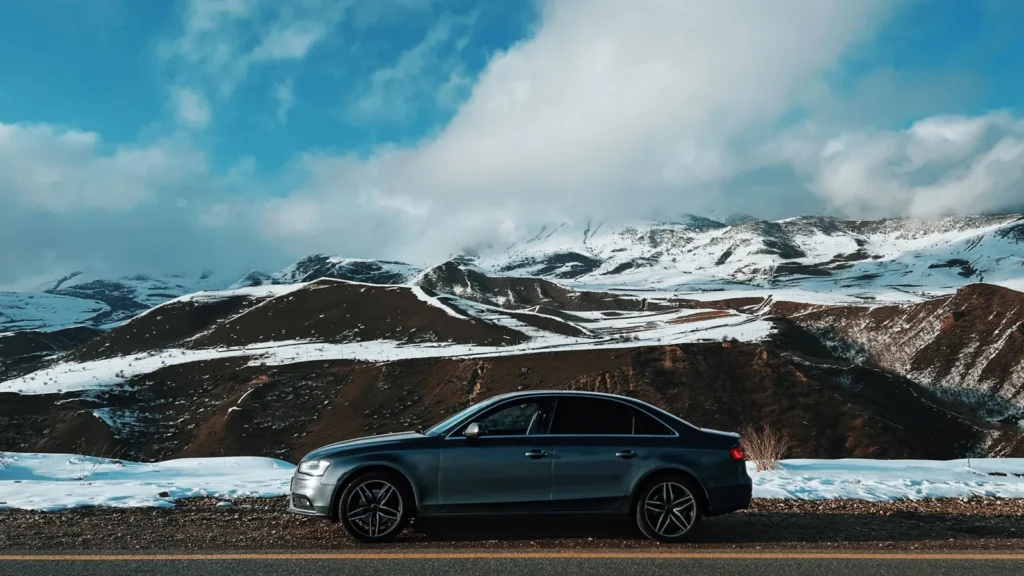
Some destinations need extra planning. In Iceland, many highland “F-roads” are legally limited to 4×4 vehicles and are closed for much of the year. Winter driving there needs constant checks of road and weather conditions. Our Iceland winter driving guide covers that. In the Alps, winter tires or snow chains may be required in certain conditions.
If you’d rather not drive at all, trains are often easier in Europe. Our guides to train travel in Europe and trains vs planes might help you decide.
Before you pick up the car
- Pack your license, your IDP (if needed), your passport and the credit card in the main driver’s name.
- Check the minimum age. Many companies add a young driver fee under 25, and some have upper age limits too.
- Film the car slowly, inside and out, before you drive away, including the fuel level and mileage.
- Ask what safety kit the car carries and where it is. Several European countries require items such as warning triangles or high-visibility vests.
- Download offline maps, and save the local emergency number.
Then drive the first hour gently. Most mistakes abroad happen in the first few junctions, while you are still getting used to the car, the signs and which side of the road feels normal.