


No one ever books a flight to Rome or Tokyo expecting to spend their Tuesday morning in a local police station or a hospital waiting room. We travel for the sunsets, the street food, and the stories we will tell for years. But sometimes, the stories take a sharp left turn. Maybe your passport vanishes in a crowded metro, or a sudden illness hits while you are in a remote village where nobody speaks English. It is in these high-stress moments that your brain tends to freeze up.
As we navigate the world in 2026, being prepared for a crisis is just as important as knowing how to use a translate app. Handling an emergency abroad is all about having a mental “break glass in case of emergency” plan so you don’t waste precious time panicking. Here is the step-by-step roadmap for when things go sideways in a foreign country.
Step 1: Secure Your Immediate Safety
The very first rule of any travel emergency is to stop and assess your physical environment. If you have been the victim of a crime, get to a well-lit, public area like a hotel lobby, a bank, or a busy cafe. If there is a medical crisis, your immediate priority is stabilization and getting professional help.
Every country has its own version of 911. Before you leave the U.S., you should have the local emergency numbers for your destination saved in your phone. In much of Europe, it is 112; in many parts of Asia or Latin America, it varies by country. If you don’t know the number, yell for “Police” or “Ambulance” in the local language. Most people are wired to help in a crisis if they understand what you need.
Step 2: Contact the Local Authorities
For crimes like theft or assault, you need a police report. This isn’t just for justice; it is a vital document for your travel insurance and for the U.S. Embassy if you need to replace documents. When you go to the police station, be prepared for a wait and a potential language barrier.
If you don’t speak the language, use a translation app or ask if there is an officer who speaks English. Do not leave without a physical copy of the report or at least a case number and the name of the precinct. This piece of paper is your “golden ticket” to getting reimbursed for stolen gear or proving why you are trying to board an international flight without a passport.
Step 3: Call the “Big Guns” (The U.S. Embassy)
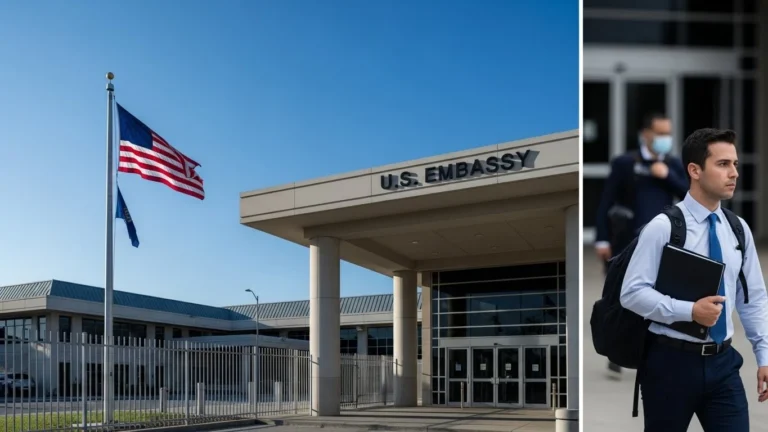
As an American citizen, the U.S. Embassy or Consulate is your ultimate safety net. They cannot get you out of a legal mess if you broke a local law, and they won’t pay your hotel bill, but they are incredibly helpful in a crisis. They can help you replace a lost passport, find English-speaking doctors, and contact your family back home if you are unable to do so.
If you have a life-or-death emergency after hours, every embassy has a duty officer available 24/7. You can reach the State Department’s Office of Overseas Citizen Services at 1-888-407-4747 from the U.S. or +1 202-501-4444 from abroad. If you followed my advice in previous articles and registered for the STEP (Smart Traveler Enrollment Program), they will already have your info on file, which speeds things up significantly.
A Midnight Dash in Madrid
I once found myself in a literal “run for your life” situation in Spain when my day bag, containing my passport and all my cash, was snatched from a park bench. I was alone, it was 11:00 PM, and I had exactly zero euros. My first instinct was to just sit down and cry, but I forced myself to walk to the nearest big hotel. The night manager was a saint; he let me use the hotel phone to call the emergency embassy line. That call changed everything. The officer on the other end was calm, gave me a list of exactly what to do at the police station the next morning, and even told me where the nearest Western Union was. It turned a catastrophic night into a manageable problem. I learned that night that the “system” actually works if you just take that first step of asking for the right help.
Step 4: Replacing a Lost or Stolen Passport
If your passport is gone, you cannot fly home. Period. Replacing it is a two-part process. First, you must report it lost or stolen online or at the embassy to prevent identity theft. Second, you must appear in person at the nearest U.S. Embassy or Consulate.
You will need a new passport photo (most embassies have a booth or a nearby shop they recommend), a copy of your police report, and any other ID you still have. If you have a digital scan of your lost passport in your email, this will make the process ten times faster. If you have urgent travel plans, the embassy can often issue a “Limited Validity Emergency Passport” the same day or the next business day. This gets you home, and you can swap it for a full-ten-year passport once you are back on U.S. soil.
Step 5: Handling Medical Emergencies
If you are hospitalized abroad, the first thing you need to know is that U.S. medical insurance (including Medicare) rarely covers you overseas. Hospitals in many countries will require a cash deposit or a “guarantee of payment” before they even admit you.
This is where your travel insurance provider comes in. Call their 24/7 emergency line immediately. They can talk to the hospital, guarantee payment, and even coordinate a medical evacuation if the local facility isn’t up to par. The U.S. Embassy can also help by providing a list of local hospitals and doctors, but remember: the U.S. government will not pay your medical bills. You are on the hook for those, so keep every single receipt and discharge paper for your insurance claim later.
Step 6: Emergency Cash and Financial Help
If your wallet is stolen, you are in a “destitute” situation. Your first move should be to call your bank and cancel your cards, but ask them if they can provide an “emergency cash disbursement.” Many premium credit cards like Amex or Chase Sapphire offer this service where they wire you cash to a local bank or a Western Union.
If you have no other options, the U.S. State Department can help your family or friends wire money to you through the “OCS Trust” system. In extreme cases of being stranded (like a natural disaster or civil unrest), the government might provide a “Repatriation Loan” to get you a flight back to the U.S., but this is a last resort. You will have to pay it back, and they will hold your passport until the debt is settled.
