


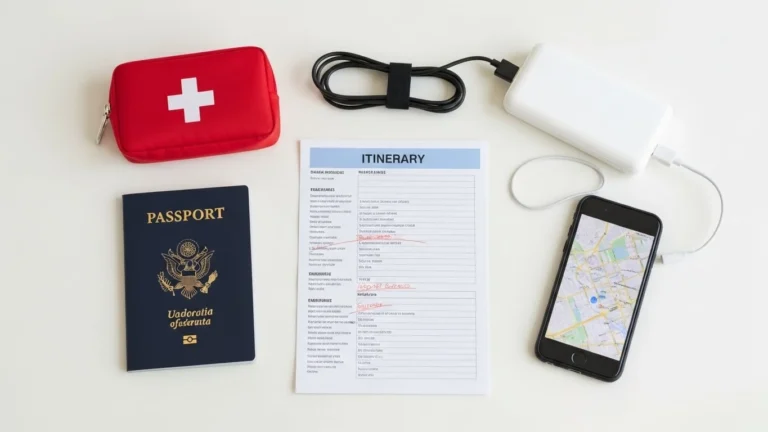
Packing for a trip is the fun part, but building a solid safety strategy is what actually ensures you get to enjoy those new outfits and fancy dinners. We often get so caught up in the excitement of a new itinerary that we treat safety like a chore to be handled later. But in 2026, being a savvy traveler means more than just knowing where the best street food is. It is about creating a protective bubble around your trip before you even lock the front door.
Most travel mishaps are not grand conspiracies; they are simple moments of being unprepared in an unfamiliar place. If you take an hour or two to set up your safety net now, you can spend your actual vacation with your mind on the scenery instead of your wallet. Here is the ultimate pre-flight safety checklist for every American heading abroad this year.
Digital Fortresses and Paper Backups
We live on our phones, which is convenient until your screen shatters or a pickpocket makes a move in a crowded metro station. Before you leave, you need to treat your data like gold. Start by scanning your passport, driver’s license, and any visa documents. Do not just keep these on your phone gallery; email them to yourself and save a copy in a secure cloud folder that you can access from any computer.
Equally important is the low-tech backup. Print out two hard copies of your passport and your travel insurance policy. Keep one in your suitcase and the other in a separate carry-on or a hidden pocket. If your electronics fail or get stolen, having that paper backup will save you days of headache at the local embassy.
The Secret Language of Bank Notifications
Nothing ruins a great meal like having your credit card declined because your bank thinks you are a victim of identity theft. Even with modern AI monitoring, many banks still flag sudden international transactions. A week before you fly, log into your banking apps and set travel notices for every country on your itinerary, including any layover spots where you might buy a coffee.
While you are at it, make sure you have the international collect-call number for your bank written down somewhere that isn’t just on the back of your card. If your card is stolen, you won’t be able to read the number on the back to report it. Also, consider carrying at least two different cards from two different banks. If one gets swallowed by a faulty ATM or blocked for “suspicious activity,” you won’t be left stranded without a way to pay for a hotel.
Health Prep and the “Yellow Card”
Health safety in 2026 involves more than just a bottle of hand sanitizer. Check the CDC’s latest guidelines for your specific destination at least six weeks out. Some vaccines require multiple doses over several weeks to be effective. If you are on prescription medication, keep it in the original pharmacy bottles with your name clearly visible.
It is also a smart move to carry a “Yellow Card” or an International Certificate of Vaccination. While many countries have gone digital, some border officials or local clinics still prefer to see the physical paper record. If you have any serious allergies or medical conditions, consider wearing a medical alert bracelet or at least having a translated card in your wallet that explains your condition in the local language.
A Lesson in Local Logic
I used to think that “staying safe” meant staying in my hotel room after dark. That changed during a trip to Mexico City where I realized that the safest places were actually the crowded plazas full of families and kids playing soccer at 10:00 PM. I had been avoiding the very places that offered the most “community security” because I was following a generic rule I had heard back home. It taught me that real safety is about observation. If the local grandmothers are out walking and the kids are playing, you are likely in a good spot. If the streets are empty and the shops have three layers of metal shutters, that is your cue to head back to the hotel.
Enrolling in the STEP Program
One of the best tools for American travelers is often the most overlooked. The Smart Traveler Enrollment Program (STEP) is a free service from the State Department that lets the U.S. Embassy know where you are. It sounds a bit like “big brother,” but it is a lifesaver if a natural disaster or a sudden political protest breaks out.
By registering your trip, you will get real-time email updates about safety and security in your specific destination. If there is a massive earthquake or an emergency at home, the embassy can actually find you or your family. It is a five-minute task that acts as a giant insurance policy for your personal safety.
The Art of the “Decoy” Wallet
If you are traveling to a city known for petty theft, a decoy wallet is a brilliant old-school trick. Take an old, expired wallet and put a few small bills and some of those fake “credit cards” you get in the mail. Keep this in your most “accessible” pocket.
If you are ever in the rare and unfortunate position of being confronted for your wallet, you can hand over the decoy and walk away. Your real cash, primary cards, and passport should be tucked away in a money belt or a secure interior pocket. Most thieves are looking for a quick score and won’t stick around to check if your Visa has an expiration date from 2019.
Choosing Your Communication Strategy
In 2026, being “offline” is a safety risk. You need a way to call a cab, check a map, or contact emergency services at all times. Before you leave, decide if you are going to use an international roaming plan or a local eSIM. Local eSIMs are often much cheaper and provide better signal strength.
Download the maps of your destination for offline use on Google Maps. This way, if you lose your data signal or run out of credit, you can still find your way back to your hotel. Also, make sure your “Find My Phone” feature is active and that a trusted person back home has your login credentials. If your phone goes missing, they can help you lock it or track it from across the ocean.
