


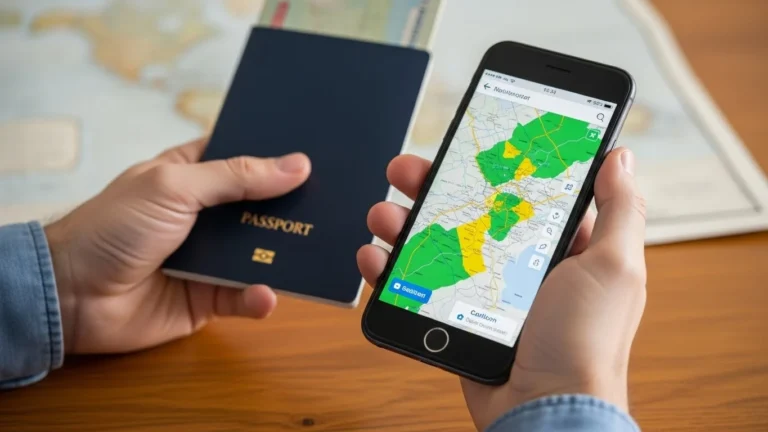
Deciding whether to book a flight in the current global climate can feel a bit like trying to solve a puzzle where the pieces keep changing shape. For many Americans, the desire to see the world is currently battling a 24-hour news cycle that makes every corner of the globe look like a danger zone. It is easy to get paralyzed by headlines about protests, new flu variants, or shifting border policies. However, the reality of travel safety is rarely found in a sensationalist headline.
Assessing risk is not about finding a place where “nothing bad ever happens” because those places do not exist. Instead, it is about doing the legwork to understand the difference between a generalized headline and the actual street-level reality of your destination. If you want to get back out there this year, you need a system to filter out the noise and find the facts. Here is how to build your own personal safety assessment before you put down a deposit.
Start With the Official Sources (But Read Between the Lines)
The U.S. State Department is your first stop, but you have to know how to interpret their levels. Most of Western Europe often sits at a Level 2 (Exercise Increased Caution) due to the risk of petty crime or occasional protests. If you see a Level 2, it does not mean “stay home.” It just means you shouldn’t be wandering around with your wallet in your back pocket or hanging out in the middle of a political demonstration.
When a country hits Level 3 (Reconsider Travel) or Level 4 (Do Not Travel), that is when you need to pay serious attention. As of early 2026, Level 4 is reserved for places with active war zones, like Ukraine or Russia, or extreme civil instability, like Haiti. The “Level 4” designation is the government’s way of saying they might not be able to help you if things go sideways. For an American traveler, that is the ultimate red flag.
Health Security in the New Year
As we have seen over the last few years, health risks can change overnight. Right now, there is a lot of talk about new influenza variants like subclade K, which has been popping up in various travel hubs. While it is not a reason to cancel your life, it is a reason to check the CDC’s travel health notices.
A smart move for 2026 is to look at the healthcare infrastructure of your destination. If you are heading to a remote part of a developing country, you need to know that a local clinic might not have the resources to handle a serious respiratory illness. On the other hand, if you are in a major city in Japan or the Netherlands, the healthcare is world-class. Always make sure your travel insurance includes a “medical evacuation” clause. It is the one thing you hope you never use but will be eternally grateful for if you need it.
The Digital Frontier: Cyber Safety
One of the newest risks to assess in 2026 isn’t a physical threat, but a digital one. Travel has become almost entirely reliant on our phones for everything from boarding passes to banking. This has made travelers prime targets for sophisticated cybercrime.
Before you go, assess the “digital safety” of your trip. Are you planning to rely on public Wi-Fi in a city known for high-tech fraud? It might be time to invest in a solid VPN or a dedicated international data plan. Sophisticated phishing scams and digital identity theft are much more likely to ruin your trip than a traditional pickpocket. Being “safe” now includes being digitally secure.
A Change in My Own Playbook
I used to be the kind of traveler who prided myself on never checking the news. I thought that “real” adventure meant just showing up and figuring it out. That changed a few years ago when I accidentally wandered into a massive citywide strike in a country I won’t name. Suddenly, there were no trains, no taxis, and the local shops were shuttered. I spent three days stuck in a hotel eating vending machine crackers because I hadn’t checked the local news before I left. Now, I spend at least twenty minutes every morning of my trip scrolling through the local English-language news site of whatever city I am in. It isn’t about being scared; it is just about knowing if the buses are actually going to run that day.
Look for “Hyper-Local” Information
General country-wide advisories can be misleading. For example, Mexico is a massive country. While the State Department might have “Do Not Travel” warnings for specific states due to cartel activity, the tourist zones of the Riviera Maya or Los Cabos often remain Level 2.
To get the real story, look for expat forums or local community groups on social media. Ask people who are actually living there right now: Are the restaurants open? Is the public transit safe at night? Are there any areas locals are avoiding? This street-level data is often much more useful than a broad government warning that hasn’t been updated in three months.
Environmental and Weather Volatility
In 2026, we are seeing more extreme weather events that can turn a safe trip into a logistical nightmare. When assessing risk, look at the “environmental security” of your timing. Is it peak hurricane season in the Caribbean? Is there a high risk of wildfires in the region you are visiting?
A natural disaster might not be a “safety” threat in the same way a crime is, but it can trap you in a location without power, water, or a way to get to the airport. Check the local weather history for the last few years to see if the “rare” events are becoming more common. If the risk is high, make sure your bookings are fully refundable.
The STEP Program: Your Invisible Safety Net
If you are an American traveling abroad, the Smart Traveler Enrollment Program (STEP) is a free service provided by the State Department that you should absolutely use. You simply enter your trip dates and locations.
If a natural disaster hits or a political situation escalates, the nearest U.S. Embassy can contact you with instructions. It also makes it much easier for your family to reach you in an emergency. It takes five minutes to sign up, and it provides a massive layer of peace of mind. It is the difference between being a lost tourist and being an informed citizen with the weight of an embassy behind you.
