


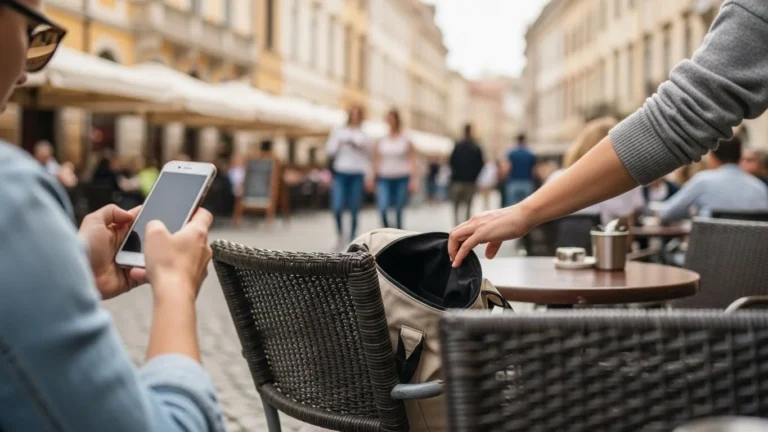
We have all seen the movies where the naive tourist gets swindled out of their life savings in a back alley. While real life scams are rarely that dramatic, the low level annoyances of travel can still drain your wallet and your good mood. From the moment you step off the plane, there is a whole ecosystem of people looking to make a quick buck off confused foreigners. You are a walking target if you look lost, overtly wealthy, or just plain oblivious.
The good news is that most tourist traps and common scams are incredibly predictable. Once you know what to look for, they lose all their power. This is not about traveling with a cynical attitude; it is about being smart and aware. You can absolutely enjoy your vacation in Paris or Rome without constantly looking over your shoulder. It is just about learning the rules of the game before you play. Here is how to keep your money in your pocket and your stress levels low.
The Friendly “Helper” at the ATM
This is one of the oldest tricks in the book and it still works because it preys on our politeness. You are at an ATM in a busy square, maybe struggling a bit with the foreign language or the machine itself. Suddenly, a friendly local appears, eager to “help.” They might stand too close, offer to press buttons for you, or distract you with conversation.
Their goal is to either see your PIN, swap your card, or use sleight of hand to make it seem like the machine ate your money when it actually just returned it to a different slot. The solution is simple: always use ATMs inside banks or in well-lit, busy areas where you can stand alone. If anyone approaches you, politely but firmly say “no” and walk away. If you are struggling, go into the bank and ask an employee for help.
The Overpriced Taxi Mafia
As soon as you exit an airport in a foreign country, you will likely be swarmed by taxi drivers. Many are legitimate, but some will try to charge you triple the fair price or take you on a ridiculously long route. This is especially true if they sense you are a first timer or do not speak the local language.
Your best defense here is research and preparation. Before you arrive, look up the official airport taxi prices to your destination. Better yet, book an airport transfer in advance through your hotel or a reputable ride sharing app. If you have to take a taxi, always confirm the price or insist on the meter before you get in. Have the address written down in the local language so there is no confusion.
The Bracelet/Rose/Birdseed Scam
This one is common in major European cities like Paris, Rome, and Barcelona. Someone approaches you, often very charmingly, and tries to give you a “free” bracelet, a rose, or some birdseed for the pigeons. As soon as it is in your hand, they demand payment and can become quite aggressive.
The only way to win this game is to refuse to engage. Do not make eye contact, do not stop walking, and do not let them put anything in your hand. If they persist, a firm “No, thank you” repeated loudly usually does the trick. You do not owe them anything.
The “Fake Policeman” Routine
This is a more sophisticated scam that targets tourists who look flustered or have just withdrawn cash. Someone claiming to be an plainclothes police officer will approach you, often asking to see your passport or wallet because they are “investigating counterfeit money” or “drug activity.” They might even flash a fake badge.
Your response should always be: “I will only show my documents at the police station.” Legitimate police officers will understand and direct you there. Their goal is to either pickpocket you while you are distracted or intimidate you into handing over cash. Always be suspicious of anyone in plain clothes asking for your wallet.
My Own Close Call
Years ago, I was in Rome and feeling pretty confident. I had navigated the city for a few days without a hitch. I was sitting at an outdoor cafe, and a woman approached me with a “petition” about deaf children. I felt bad, so I started to sign it. As I was distracted, her accomplice, a small child, tried to pickpocket my backpack which was slung over the back of my chair. Luckily, the waiter saw it happen and yelled, scaring them off. It taught me that even when you feel safe, those few seconds of distraction are all a scammer needs. Never let your guard down completely in a busy place.
Restaurants With “Special” Menus
You walk into a charming restaurant near a major attraction, and the waiter seems overly friendly. When you ask for the menu, they bring you a “special” one that is either unpriced or has ridiculously inflated prices compared to what the locals are paying. This is especially common in tourist heavy areas.
Before you even sit down, always check the menu outside the restaurant for prices. If there is no menu visible or if the prices seem too high for the area, walk away. When you are seated, always ask for the standard menu. If they resist, that is your cue to leave. Also, be wary of places that bring out unrequested appetizers like bread or olives; these are often added to your bill at an absurd price.
The “Closed Attraction” Lie
This scam happens when someone tells you that the attraction you are trying to visit is “closed for a holiday” or “only open to locals today.” They will then try to steer you towards a “better” attraction or a shop where they get a commission.
Always verify opening times and holiday schedules online before you go. If someone tells you an attraction is closed, ignore them. Walk directly to the entrance and check for yourself. Official notices will always be clearly posted.
The Photo Opportunity With a “Local”
In many popular spots, you will find people dressed in traditional costumes, or holding cute animals, or even just looking “picturesque.” They will offer to take a photo with you or let you hold their animal. As soon as the photo is taken, they will aggressively demand payment, often a much higher price than you anticipated.
As a rule, assume any unsolicited “photo opportunity” will come with a demand for money. If you do not want to pay, do not engage. If you do want a photo, agree on a price before you take out your camera.
Preventing Pickpocketing
Pickpocketing is the most common crime against tourists. It usually happens in crowded areas like subway stations, markets, or major landmarks. Scammers work in teams, often creating a distraction while another person dips into your bag.
Wear your backpack on your front in crowded areas. Keep your wallet in your front pocket. Use a crossbody bag with a zipper, not an open tote. Never keep all your cash and cards in one place. Leave your passport and most of your money in the hotel safe. Only carry what you need for the day. Be extra vigilant when someone bumps into you or creates a sudden commotion.
