


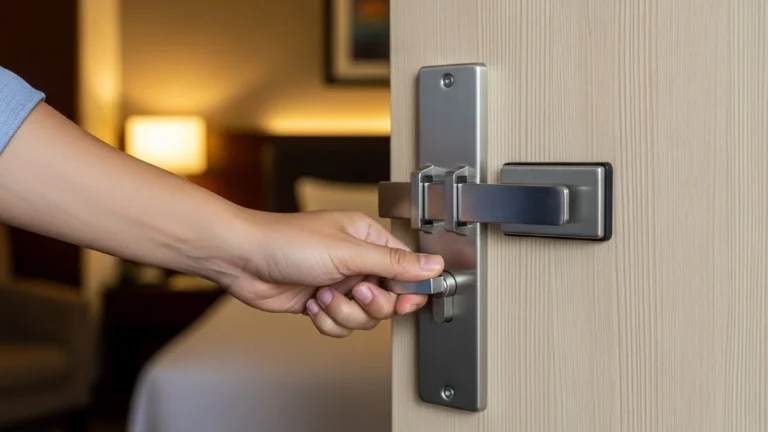
After a long day of travel, there is no feeling quite like finally dropping your bags in a hotel room or a cozy apartment rental. It is that moment where you finally feel like you can exhale and start your vacation. But before you flop onto the bed or head out to find the nearest tapas bar, you need to do a quick sweep of your sanctuary. Your accommodation is your home away from home, and in 2026, making sure it is a truly safe one requires a mix of old-school common sense and a little bit of tech savvy.
Whether you are a loyalist to the big hotel chains or you prefer the “live like a local” vibe of a short-term rental, the safety landscape has changed. From the rise of hidden cameras to the age-old problem of faulty door locks, being proactive is the only way to ensure your trip stays on the right track. Here is the ultimate guide to securing your space so you can sleep as soundly as you do in your own bed back in the States.
The Hotel Room Sweep: Five Minutes for Peace of Mind
Hotels often feel like high-security fortresses compared to a private home, but don’t let the 24-hour front desk lull you into a false sense of security. As soon as the bellhop leaves or you close the door for the first time, perform a quick “room sweep.” Start with the basics: check that the door actually latches and that the deadbolt and security chain are in working order.
Next, head to the windows or the balcony. If you are on a lower floor, these are prime entry points for opportunistic thieves. Make sure they lock securely and that the curtains close completely without leaving a gap. While you are at it, check the phone to ensure you can reach the front desk in an emergency. It sounds paranoid until the one time you actually need help and find a dead line.
The Short-Term Rental Challenge: Vetting Your Host
Airbnb and other rental platforms offer incredible experiences, but they lack the standardized security of a major hotel brand. Your safety starts before you even book. Read the reviews with a critical eye. Look past the comments about the “great coffee” and search for mentions of the neighborhood vibe, the lighting at the entrance, or any issues with the locks.
In 2026, the best hosts are those who have moved toward smart locks with unique codes for every guest. If a host tells you the key is “under a rock” or in an unlocked mailbox, that is a red flag. It means anyone who has stayed there in the last year could have made a copy of that key. If you find yourself in a place with a flimsy lock, don’t be afraid to use a portable door lock or a simple rubber doorstop to give yourself an extra layer of protection from the inside.
Hunting for Hidden Cameras
It is the horror story every traveler fears: finding a hidden camera in their private space. While it is rare, it is worth a quick check, especially in short-term rentals where oversight is lower. You don’t need fancy equipment to do this. Turn off all the lights and use your phone’s flashlight to scan the room. Camera lenses are made of glass and will reflect a tiny, distinct glint of light even if the camera itself is the size of a pinhole.
Focus your search on items that have a clear “view” of the bed or the bathroom. Common hiding spots include smoke detectors, alarm clocks, USB wall chargers, and even picture frames. If you want to go high-tech, you can download apps like Fing that scan the local Wi-Fi network for connected devices. If you see something labeled “IP Camera” that wasn’t disclosed in the listing, it is time to take a photo, leave immediately, and contact the platform’s support team.
My Hotel Room Wake-Up Call
I used to be pretty casual about hotel safety until a trip to a major European city a few years back. I had checked in late and was so tired I just threw my bags down and fell asleep without using the security latch. Around 2:00 AM, I woke up to the sound of my door clicking open. A very confused, very drunk traveler had been given a key to my room by mistake at the front desk. Luckily, it was just an honest error, but it terrified me. It taught me that the “front desk” is human and they make mistakes. Now, the very first thing I do—before I even take off my shoes—is engage the deadbolt and the swing latch. It is a three-second habit that would have saved me a very scary wake-up call.
Fire Safety: The 3-to-6 Rule
Fire is a much more likely threat than an intruder, yet we rarely think about it. When you are booking, try to request a room between the third and sixth floors. Why? Because ground floors are too easy for burglars to access from the street, but floors above the sixth are often out of reach for many fire department ladders.
The moment you arrive, take a look at the evacuation map on the back of your door. Don’t just glance at it; actually walk out into the hallway and find the two nearest exit stairs. Count the number of doors between your room and the exit. If the hallway is full of thick smoke, you won’t be able to see the “Exit” sign, and knowing that the door is exactly eight paces to your left could quite literally save your life.
Protecting Your Digital and Physical Valuables
The “in-room safe” is a great amenity, but it is not a bank vault. Hotel staff often have master codes or keys to open them in case a guest forgets their password. If you are staying in a high-end hotel, the safe is likely fine for your passport and some backup cash, but don’t leave your grandmother’s heirloom ring in there.
A better strategy for high-value items is to use the hotel’s main safe at the front desk, which usually involves a more formal check-in process and higher liability for the hotel. If you are in an Airbnb without a safe, consider a “portable safe” or a lockable bag that you can cable-tie to a heavy piece of furniture. At the very least, keep your valuables tucked away in your locked suitcase rather than sitting out on the desk. Out of sight truly is out of mind for most opportunistic thieves.
Managing the “Do Not Disturb” Strategy
One of the simplest ways to protect your room while you are out is to make it look like you are still there. Many travelers only put the “Do Not Disturb” sign out when they are sleeping, but it is actually more useful when the room is empty. It discourages housekeeping or anyone else from entering unexpectedly.
You can also leave the TV on at a low volume or leave a light on in the bathroom. If someone is casing rooms for an easy target, they are going to skip the one that sounds like it has an active occupant. Just remember to occasionally allow housekeeping in if you are on a long stay; a room that has had the “Do Not Disturb” sign up for four days straight can sometimes trigger a “wellness check” from the hotel security.
