Last reviewed: November 2026. Ticket prices, opening hours and booking rules in Rome change often, so check each official website before you go.
Three days is enough to see the big three of Rome: the ancient city around the Colosseum, the Vatican, and the Baroque centre with the Pantheon and Trevi Fountain. It is not enough to see everything, so this itinerary groups sights that sit close together, puts the timed tickets where they work best, and leaves room for long lunches and evening walks.
Below you’ll find the plan day by day, the bookings to make before you fly, what the main sights cost in 2026, and how to get around without wasting time.
What to book in advance
Rome has moved most of its headline sights to timed, named tickets. Book these three before you travel and the rest of the trip can stay flexible.
- Colosseum, Roman Forum and Palatine. The standard 24-hour ticket costs €18 and gives one timed entry to the Colosseum plus one entry to the Forum and Palatine. Tickets are nominative, so the name on each one must match the visitor’s ID, and slots open 30 days ahead on the official Parco archeologico del Colosseo site. Full Experience tickets (€24) add the arena floor or the underground.
- Vatican Museums and Sistine Chapel. €20 at the door or €25 booked online with a timed “skip the line” slot through the Vatican Museums’ own ticket office. The museums are closed on Sundays, except the last Sunday of the month, when entry is free but queues are long.
- Galleria Borghese. Booking is compulsory for everyone. A full ticket is €16 plus a €2 booking fee, and visits are timed at two hours. It is closed on Mondays.
Two smaller tickets you can buy on the day: the Pantheon (€7 since 1 July 2026, with optional timed booking) and the Trevi Fountain basin (€2 for non-residents since 2 February 2026). St Peter’s Basilica is free to enter.
Day 1: Ancient Rome
Recommended Products


LUXE x MOLESKINE ROME CITY TRAVEL GUIDE NOTEBOOK: Pocket-size travel guide notebook (3.5" x 5.5") combining curated Rome recommendations with space to capture notes, observations, ideas, and memories on the go.
Morning: the Colosseum
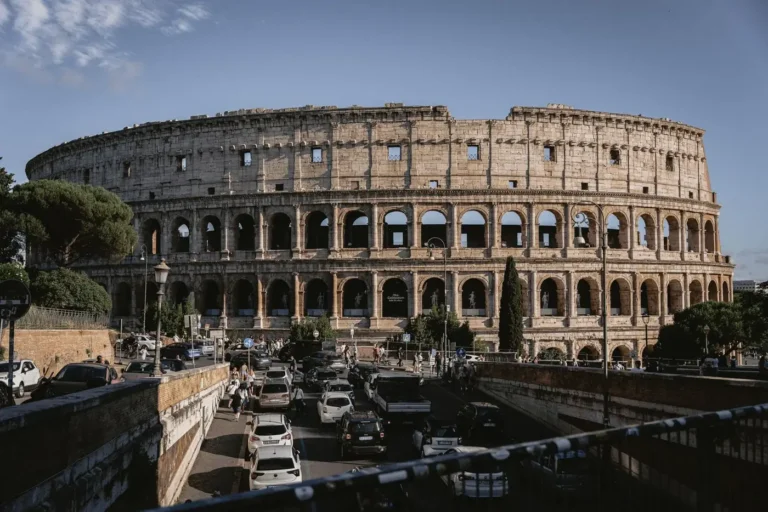
Take the earliest Colosseum slot you can get. The amphitheatre opens at 8:30, and the first hour is the calmest. Arrive about 15 minutes before your time, with ID for everyone in your group. The standard ticket gives you around 75 minutes inside, which is enough for both public levels and the terraces.
Late morning: the Roman Forum and Palatine Hill
Walk straight across to the Forum and Palatine on the same ticket. This is the part people underestimate: it is a large open site with uneven paths, little shade and few places to buy food. Bring water, wear proper shoes and allow at least two hours. The views over the Forum from the Palatine are the best free reward of the day.
Afternoon: Capitoline Hill and Monti
Leave by the Forum’s exit towards the Capitoline Hill and climb Michelangelo’s staircase to the Piazza del Campidoglio. The Capitoline Museums are there if you still have energy; if not, the terrace behind the square looks back over the whole Forum. Then wander into Monti for a late lunch. It is a short walk from the Colosseum and has far better food than the streets right next to the monument.
Evening: Trastevere
Cross the Tiber to Trastevere for dinner. The lanes around Piazza di Santa Maria in Trastevere get busy after dark, so book a table on a weekend. It is lively rather than quiet, and pickpockets work the busiest corners, as they do around every big Roman sight. My guide to avoiding scams and tourist traps at major attractions covers the usual tricks, from fake petitions to “free” bracelets.
Day 2: The Vatican and the river
Recommended Products


Morning: Vatican Museums and the Sistine Chapel
Book the first or second slot of the day. The museums open at 8:00 Monday to Saturday, and the route is long and one-way, ending in the Sistine Chapel. Plan on three hours if you want to see the Raphael Rooms and the map gallery without rushing. Photos are not allowed in the chapel, and staff ask for silence.
The entrance is on Viale Vaticano, on the north side of the walls, not in St Peter’s Square. The closest metro stops are Ottaviano and Cipro on line A.
Midday: St Peter’s Basilica
Entry to the basilica is free, but everyone goes through a security check, so expect a queue in St Peter’s Square at busy times. The dress code is enforced: shoulders and knees covered for everyone. Climbing the dome is a separate paid ticket booked on the basilica’s official site; the lift only takes you part of the way, and the final section is narrow stairs.
Afternoon: Castel Sant’Angelo and Piazza Navona
Walk along Via della Conciliazione to Castel Sant’Angelo, built as Hadrian’s mausoleum and later used as a papal fortress. The terrace has one of the best views of St Peter’s dome. Then cross Ponte Sant’Angelo, with its Bernini angels, and walk to Piazza Navona and Bernini’s Fountain of the Four Rivers.
Evening: Campo de’ Fiori and the Jewish Ghetto
Campo de’ Fiori is a market square by day and a busy meeting spot at night. A few minutes away, the old Jewish Ghetto is one of the best places in Rome for traditional food, including fried artichokes in season.
Day 3: The Baroque centre and Villa Borghese
Morning: the Pantheon and Trevi Fountain
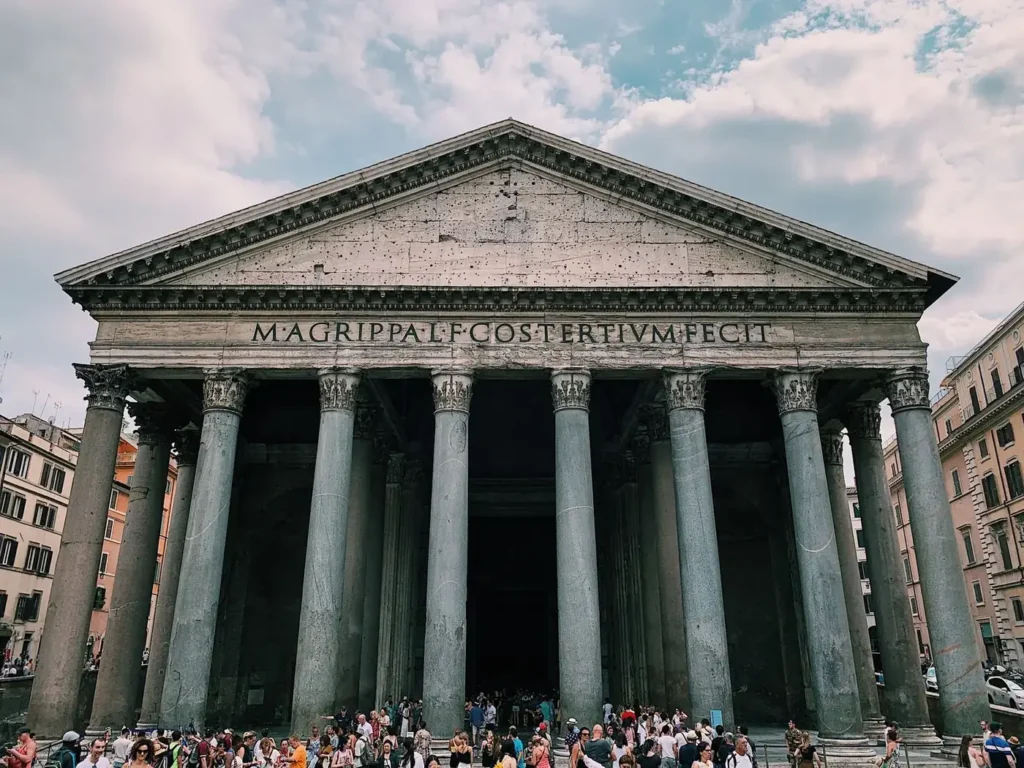
Start at the Pantheon when it opens at 9:00. The building is nearly 1,900 years old and its dome is still the largest unreinforced concrete dome in the world. A visit takes about half an hour. It is free on the first Sunday of the month, and free during Mass for worshippers, but there is no skip-the-line ticket.
From there it is a ten-minute walk to the Trevi Fountain. The square is always free; the €2 ticket is only for the walkway down by the water. Paid hours run from 9:00 to 22:00 (from 11:30 on Mondays and Fridays), so if you want it without a ticket and without crowds, come before 9:00 or late at night. Buy at the entrance on Via della Stamperia by card, or online through the official Trevi Fountain site.
Late morning: the Spanish Steps
Walk up to the Spanish Steps. Sitting on them is banned and can lead to a fine, so treat them as a viewpoint rather than a picnic spot. The streets below, around Via Condotti, are Rome’s designer shopping district.
Afternoon: Galleria Borghese and the park
Take an early afternoon Borghese slot, then spend the rest of the day in the Villa Borghese park. The gallery is small but packed with Bernini sculptures and Caravaggio paintings, and the two-hour limit is enough. Afterwards, walk to the Pincio terrace above Piazza del Popolo for sunset.
Evening: a final dinner
For your last night, eat away from the main squares. Testaccio, south of the centre, is known for classic Roman dishes like cacio e pepe, carbonara and offal-based recipes, and is a short tram or metro ride away.
What three days in Rome costs
Entry fees for this plan add up to around €70 to €90 per adult, before food, transport and any dome climb.
| Sight | Full price (2026) | Good to know |
|---|---|---|
| Colosseum, Forum and Palatine | €18 | Named, timed ticket, valid 24 hours |
| Vatican Museums | €20, or €25 online | Closed most Sundays |
| St Peter’s Basilica | Free | Dress code and security check |
| Castel Sant’Angelo | €18 | Closed on Mondays |
| Pantheon | €7 | Free on the first Sunday of the month |
| Trevi Fountain basin | €2 | The square stays free |
| Galleria Borghese | €16 + €2 booking | Booking compulsory, closed Mondays |
Under-18s get into Italian state sites free, and EU citizens aged 18 to 25 pay €2 at many of them. On the first Sunday of each month, state museums and archaeological sites are free for everyone, which saves money but brings big crowds. If you’d like more ideas for cheap sightseeing, my roundup of free and low-cost attractions in major cities has more.
Getting around Rome
- Walk. Days 1 and 3 are almost entirely walkable. The centre is compact, but cobblestones are hard on feet, so bring shoes you’ve already broken in.
- Tap and go. You can pay for buses, trams and the metro by tapping a contactless bank card. A single fare is €1.50 for 100 minutes on surface transport (one metro journey), and the system caps you at the €8.50 24-hour price if you ride a lot. Use the same card every time; each person needs their own card. Details are on the ATAC tap&go page.
- Metro. Line A runs to the Vatican (Ottaviano), the Spanish Steps (Spagna) and Termini. Line B runs to the Colosseum (Colosseo).
- Taxis. Use the official white taxis from ranks or a taxi app. Avoid anyone offering a ride inside the station.
If you’re continuing by train to Florence, Naples or Venice, my guide to train travel in Europe covers tickets, validation and how to keep your bags safe on board.
When to go
April, May, late September and October are the most comfortable months, with warm days and fewer extreme crowds than summer. July and August are hot, and the midday sun on the Forum is hard going. Winter is quieter and cheaper, but the Colosseum park closes at 4:30 pm between late October and the end of February, so you’ll need early starts. For a month-by-month view, see where to travel each month.
Frequently asked questions
Is three days enough for Rome?
It’s enough to see the main sights at a comfortable pace: ancient Rome, the Vatican and the historic centre. Add a fourth day for a day trip to Ostia Antica or Tivoli, or for the Appian Way and the catacombs.
Do I need to book the Colosseum in advance?
Yes, in practice. Entry is by timed slot, tickets are named, and popular times sell out. Slots open 30 days before the visit on the official site.
Is the Roma Pass worth it for three days?
It can be if you plan to visit several paid museums and use public transport a lot. Note that the Pantheon is not included, and the Vatican Museums are a separate state. Compare the pass price with the tickets you’ll actually use.
What should I wear to the Vatican?
Cover your shoulders and knees. This applies to St Peter’s Basilica and the Sistine Chapel, and staff turn people away.
Can I still throw a coin in the Trevi Fountain without a ticket?
Not from the basin edge during paid hours, because the ticket covers the walkway by the water. You can see the fountain free from the square at any time, and the walkway is free outside paid hours.